Building Your Own Home: The Owner-Builder Experience
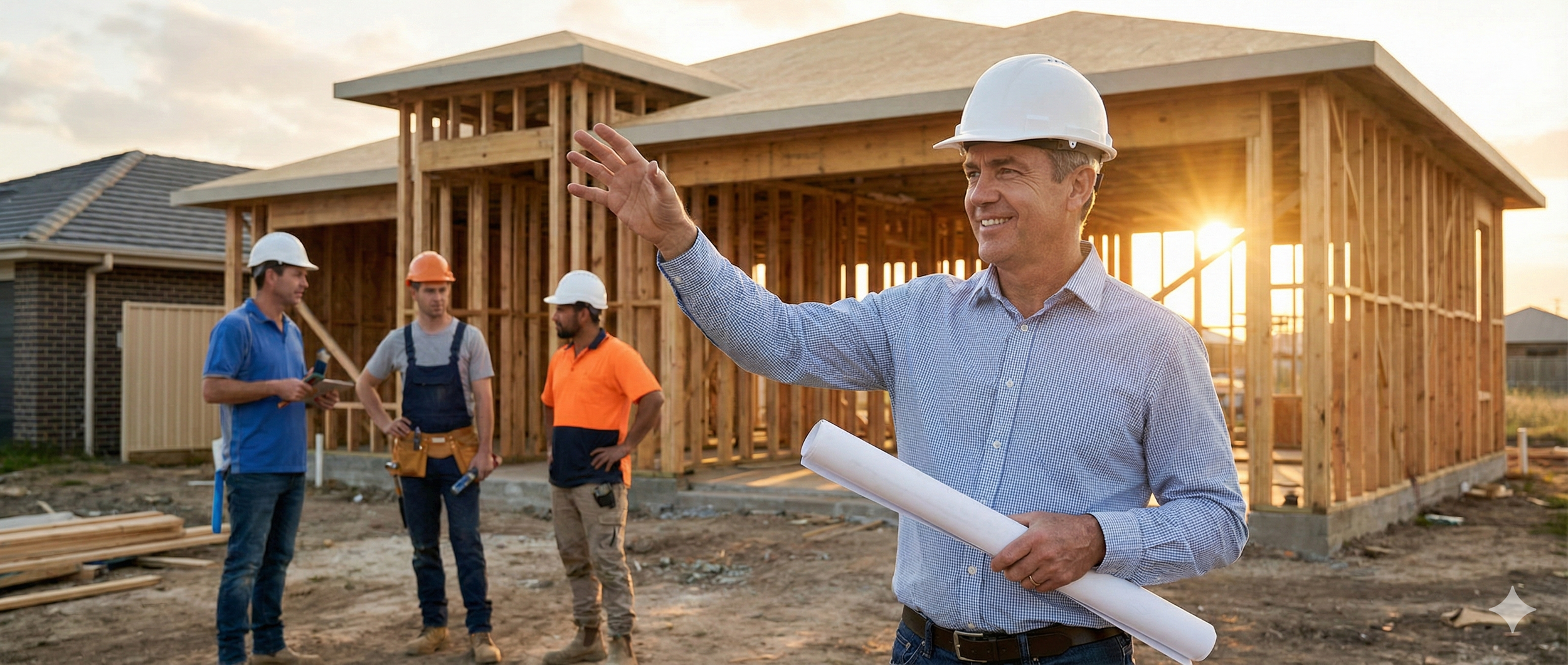
At Round Table Design Studio, we design unique homes for a wide variety of clients. While many of our clients choose to work with established General Contractors, we have a special place in our portfolio for those who choose the adventurous path of the Owner-Builder.
Taking on the role of the builder for your own home is a bold decision. It allows for a deep, hands-on connection to the creation of your space. Whether you are a seasoned industry professional or a first-time builder with a dream and a lot of grit, we are here to support you.
Below, we highlight a few of our favorite projects brought to life by owner-builders, followed by a guide on what to expect, the team you’ll need to assemble, and how we help navigate this rewarding but complex process.
-
![]()
Thompson Creek
3800 square foot contemporary custom home designed to create a strong visual and physical connection between interior living spaces and the surrounding landscape. Set within a wooded site, the home uses extensive glazing and carefully framed openings to draw natural light deep into the plan while maintaining privacy and a sense of retreat.
-
![Custom Designed modern house in North Georgia with large glass windows and sliding doors surrounded by trees, with an outdoor deck featuring a dining table set and outdoor seating.]()
Cold Lake, Georgia
Owner Builder Nestled in the North Georgia Mountains, this project features a set of twin treehouses. Each home is 1,200 square feet, designed with a laser focus on relaxation and immersion in the beautiful surrounding landscape. The owner-builder approach allowed for a personal touch in preserving the natural beauty of the site while constructing these unique retreats.
-
![Aerial view of a custom designed lakeside Florida property featuring two large houses, a boat dock, and a covered boat lift on a calm lake surrounded by trees.]()
Sea Lavender, Florida
Built high above flood levels, this getaway retreat houses two bedrooms, two bathrooms, and central entertaining spaces. Managing such a technically specific build near water is a testament to what a dedicated owner-builder can achieve with the right design documents in hand.
-
![]()
Transart
4,400 square foot Mid-Century Modern residence designed to carefully negotiate a complex, sloped site while maintaining clarity of form and plan. The home’s long, narrow footprint responds directly to the constraints of the terrain, allowing the architecture to sit lightly within the landscape rather than dominate it.


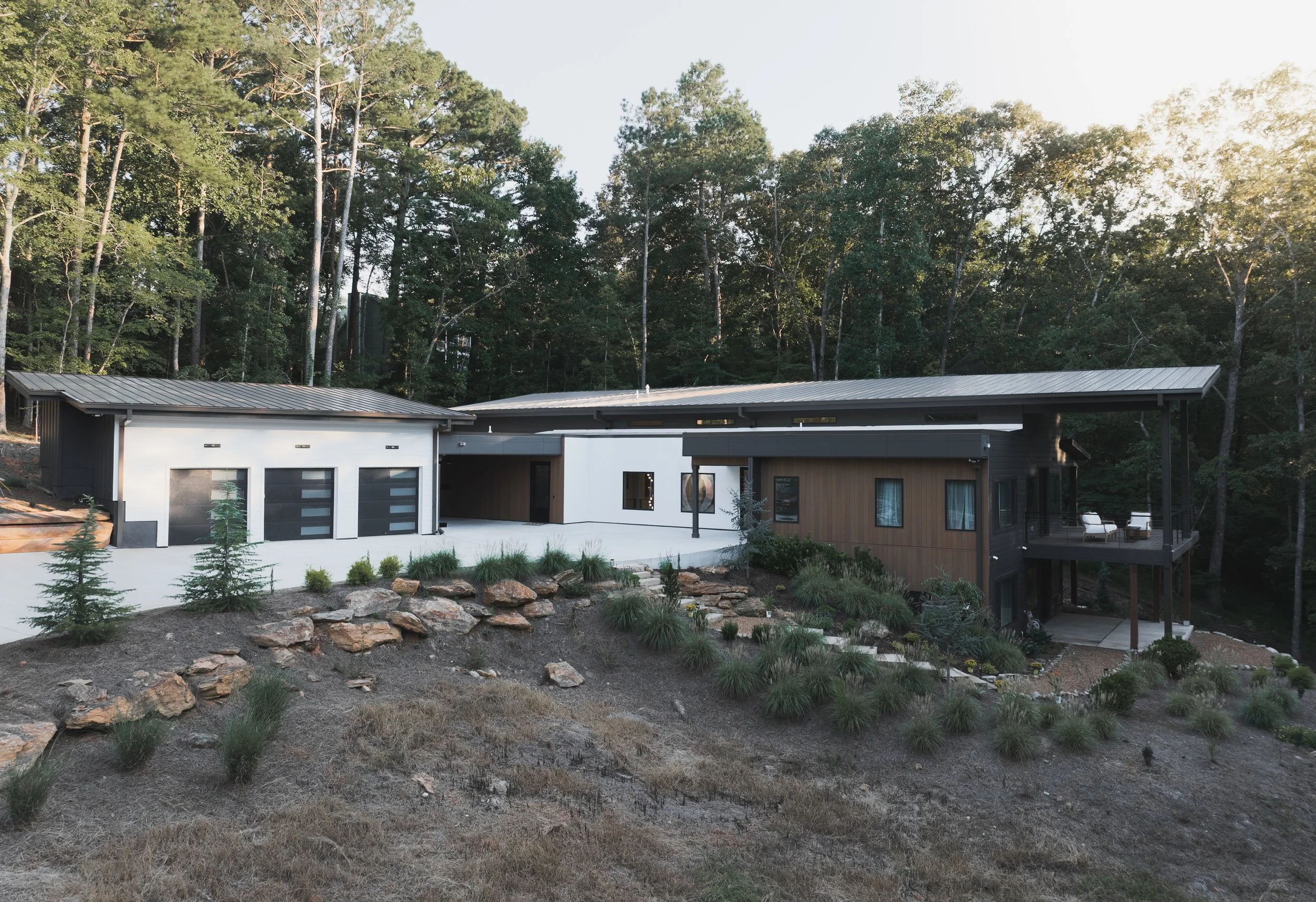
The Pros & Cons of Being Your Own Builder
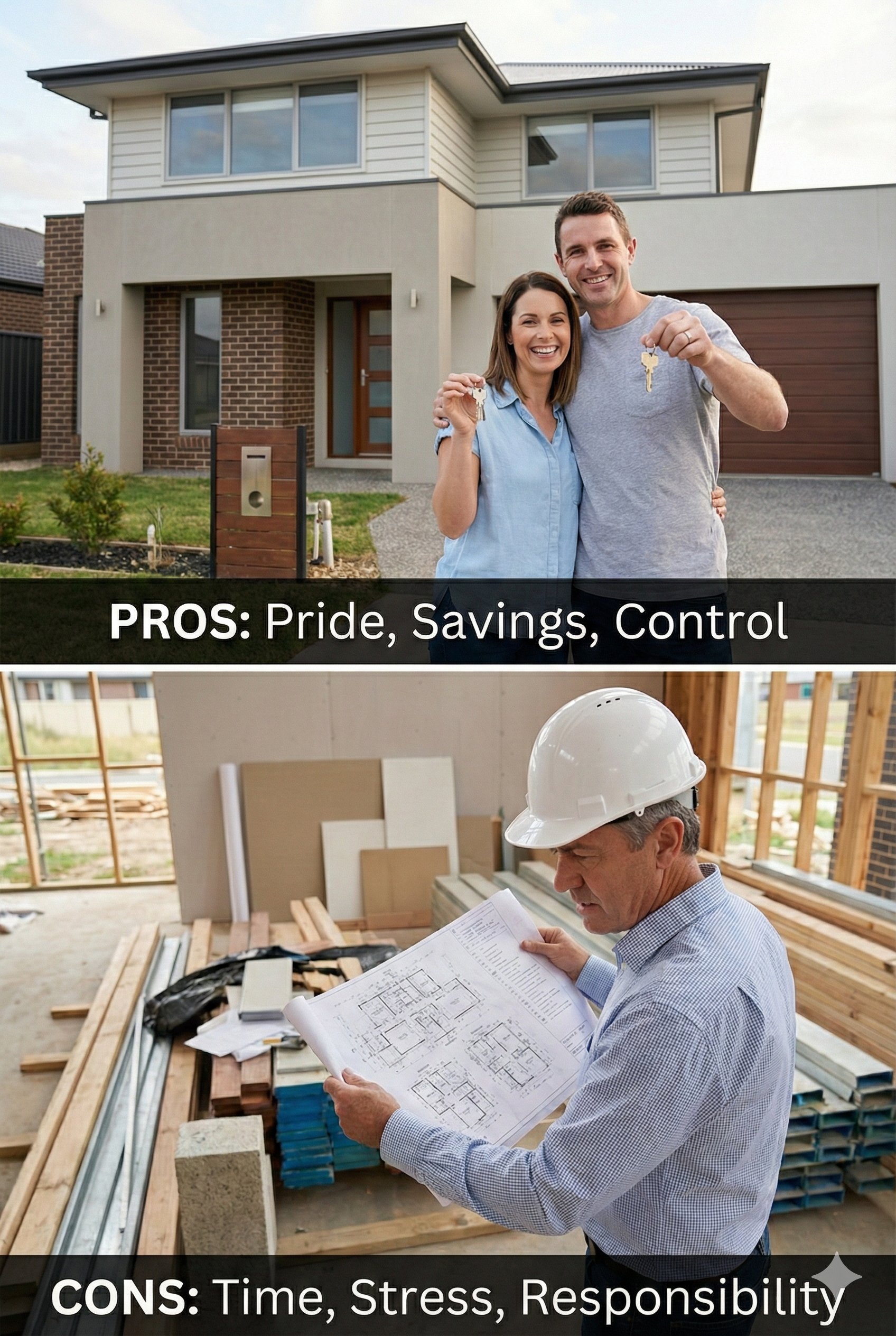
Constructing your own home is not for the faint of heart, but for the right person, it can be the experience of a lifetime.
The Pros
Cost Savings: By removing the General Contractor's fee (typically 15-25% of construction costs), you can potentially save a significant amount of money—or redirect those funds into higher-quality finishes.
Total Control: You have the final say on every nail, schedule change, and subcontractor choice.
Pride of Ownership: There is an unmatched satisfaction in standing in a home you not only paid for but physically managed into existence.
The Cons
Time Commitment: It is essentially a full-time job. Managing schedules, material deliveries, and tradespeople requires daily attention.
Stress & Responsibility: If a sub-contractor doesn't show up or a mistake is made, it is your job to fix it. The "buck stops with you."
Financing Challenges: Construction loans for owner-builders can be harder to secure than those for projects with a licensed GC.
How We Support Owner-Builders
This is where Round Table Design Studio bridges the gap.
When you hire a General Contractor, they typically take our designs and run with them, requiring less input from us during the build because they have years of field experience. However, for an owner-builder, our role often expands.
Because we can walk the client through the process of building, our detailed design documents become your roadmap. We help you understand the sequence of construction and what each sub-contractor needs to do their job. Whether you have zero experience or come from a contracting background, we ensure your plans are clear, code-compliant, and ready for the realities of the site. We act as your technical anchor, ensuring that while you manage the build, you are never building "blind."
Understanding Your Team: The Sub-Contractors
One of the most daunting parts of how to build a home yourself is managing the "moving parts." A General Contractor usually has a Rolodex of trusted trades; as an owner-builder, you become the conductor of this orchestra.
Here is a look at the major players you will likely encounter on a build site. This is not an exhaustive list, but it gives you an idea of the complexity involved:
Surveyor: Determines the exact property lines and topographic levels of your land so we can design the house to fit perfectly.
Grader: The heavy machinery operator who clears the land, excavates for the basement or foundation, and manages site drainage.
Concrete & Foundations: The team that pours the footings, slab, or basement walls that hold your house up.
Framers: The carpenters who build the skeleton of the house—walls, floors, and roof trusses.
Window & Door Suppliers: Specialists who provide the external "envelope" of your home to make it weather-tight.
Plumber: Installs the piping for water and sewage (rough-in) early on, and returns later to install sinks, toilets, and faucets (trim-out).
Electrician: Runs the wiring for lights and power throughout the home.
HVAC (Heating, Ventilation, and Air Conditioning): Installs the ductwork, furnaces, and AC units to keep your home comfortable.
Laborers: General hands for site cleanup, moving materials, and helping keep the site safe.
Cabinet Makers & Joiners: Craftsmen who build your kitchen, vanities, and built-in storage.
Kitchen Consultants: specialized designers who often work with cabinet makers to optimize the layout of the heart of the home.
Engineers: Structural engineers are often required to sign off on specific load-bearing elements during the build.
County or City Inspector: The government official who visits at critical stages (foundation, framing, electrical, etc.) to ensure everything meets code.
Landscapers: The team that finishes the exterior grounds, planting, and hardscapes.
Finishes Team (Flooring/Tile): Installers for your hardwood, carpet, and bathroom tiling.
Painters: The final touch that brings the interior and exterior to life.

How to Find Contractors for Your Build
Finding the right team is arguably the most critical step in building your own house. Since you don't have a GC's established network, how do you find these people?
Referrals: This is the gold standard. Ask friends, family, or neighbors who have recently built or renovated.
Site Scouting: If you see a house down the road under construction that looks well-managed, stop by and ask who they are using.
Local Supply Houses: The pro-desk at a local lumber yard or plumbing supply store often knows which sub-contractors pay their bills on time and do good work.
Google Search: Useful for initial research, but always verify with reviews and references.
Our Network: Sometimes we can refer people we have met during our years of experience in the industry.
There is a lot to it, and finding sub-contractors to build my home can feel overwhelming. However, with detailed planning, the right design team behind you, and a willingness to learn what our clients learnt when building their own homes, it is an achievable and deeply rewarding goal.